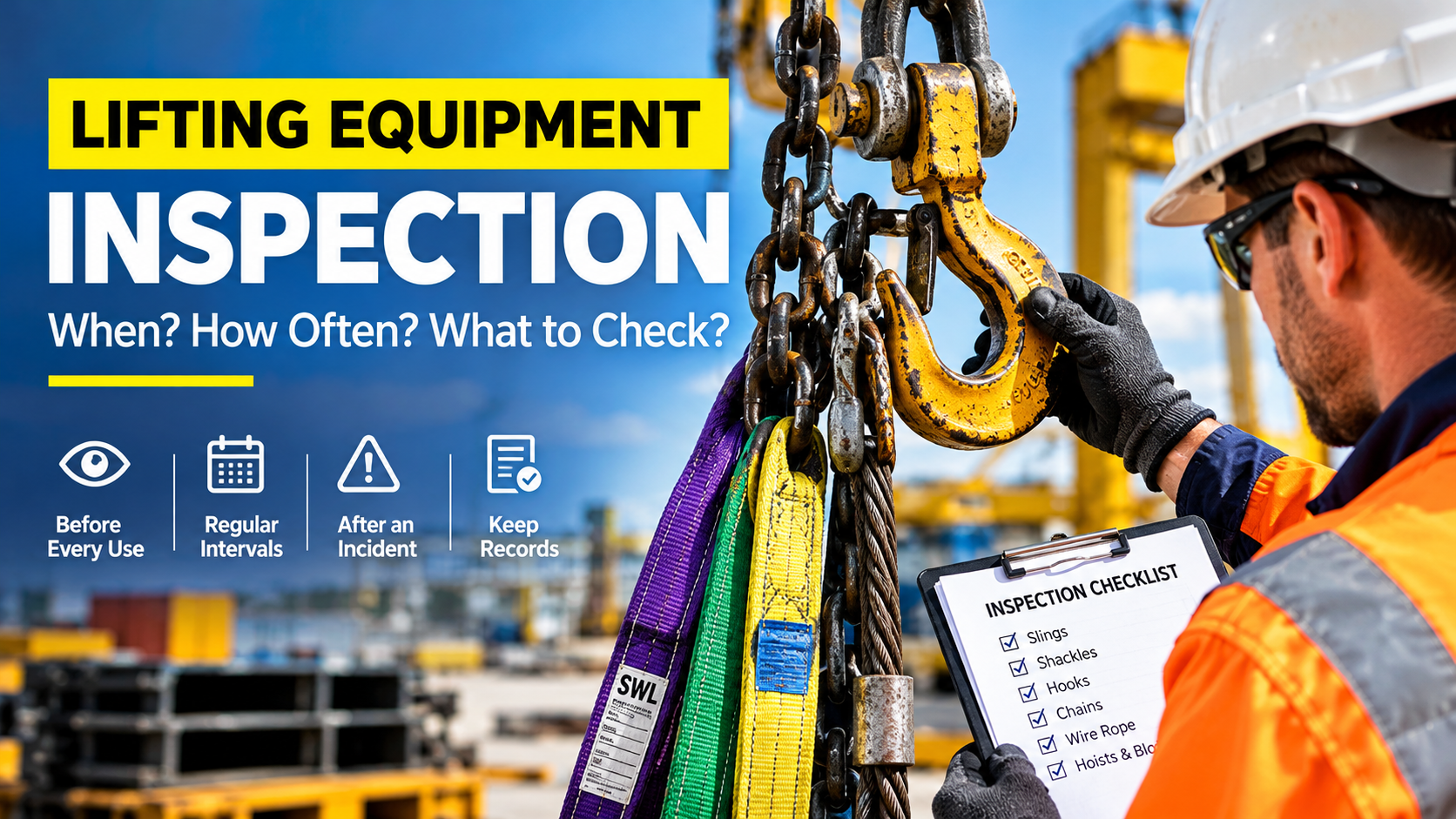
Slings, shackles, hoists and other lifting gear carry loads that can seriously injure people if they fail. Inspecting them at the right times is one of the simplest ways to find wear and damage before it becomes an incident.
1. Before every use
The person using the equipment should do a quick visual and hands-on check each time. Look for:
- a missing or unreadable safe working load (SWL) or identification tag;
- cuts, abrasion, melted or UV-damaged fibres on synthetic slings;
- broken wires, kinks, crushing or corrosion on wire rope;
- stretched, gouged, twisted or corroded chain links;
- cracked, bent, worn or distorted hooks, shackles and fittings;
- hoists and blocks that do not operate smoothly.
2. At regular intervals
A competent person should carry out and record a more detailed inspection at regular intervals. A common approach for slings and general lifting gear is every six months, and some sites use colour-coded tags to show which inspection period the item is in. Heavy use, harsh environments or high-risk lifts usually call for shorter intervals. The applicable Australian Standards, such as AS 4991 for lifting devices and the standards for each sling type, the manufacturer’s instructions and your risk assessment decide the right interval for your equipment.
3. After an incident
Inspect straight away if the equipment has been overloaded, shock-loaded, dropped, exposed to heat or chemicals, or if you suspect it has been damaged.
If you find damage
- Remove the item from service immediately and tag it so no one uses it.
- Do not repair lifting gear unless the repair is done by a competent person following the manufacturer’s requirements.
- Replace or have the item assessed before it returns to service.
Keep good records
Record each item’s ID, inspection date, findings and the next due date. Under Australian work health and safety laws, businesses must manage the risks from plant and equipment, and inspection records are strong evidence that you are doing so.